
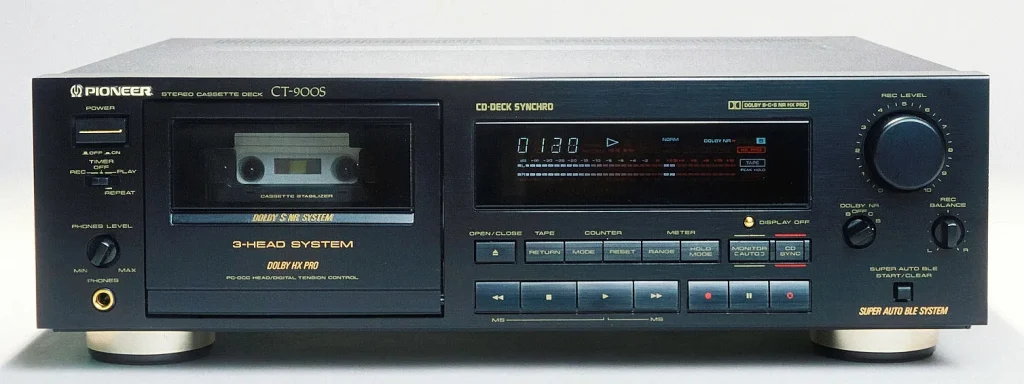
Cassette decks vary wildly depending on belt condition, head wear, and how long a unit sat unused before you got to it. Here’s what actually separates a deck worth buying from one that’s going to chew your tapes.
What to Look For
- Belt condition — stretched or cracked belts cause wow & flutter and uneven playback speed
- Head alignment and cleanliness — dirty or misaligned heads mean muddy playback
- Working Dolby B/C noise reduction switch
- VU meters that actually respond, not stuck needles
- Auto-reverse mechanism — nice to have, not essential
Our Pick: A Well-Serviced 3-Head Deck
For most listeners, a 3-head deck from the early-to-mid 1980s hits the sweet spot of sound quality and part availability. The separate record and playback heads let you monitor exactly what’s being recorded, which single-head decks can’t do, and Dolby-equipped units keep tape hiss under control on quieter recordings.
THE VERDICT
- Wow & Flutter: 0.05%
- Heads: 3 (separate record/play)
- Noise Reduction: Dolby B & C
- Condition: Belts replaced, fully serviced
Best for: serious tape collectors who want accurate monitoring while recording.
Pros & Cons
Pros
- Warmer sound than most digital reissue decks
- Separate record/play heads for accurate monitoring
- Belts and parts are still widely available
Cons
- Belts need periodic replacement every few years
- Bulkier and heavier than a portable Walkman-style deck
Whichever deck you land on, budget for a service if the seller hasn’t already done one — fresh belts and a head cleaning turn a mediocre-sounding deck into a genuinely great one.