
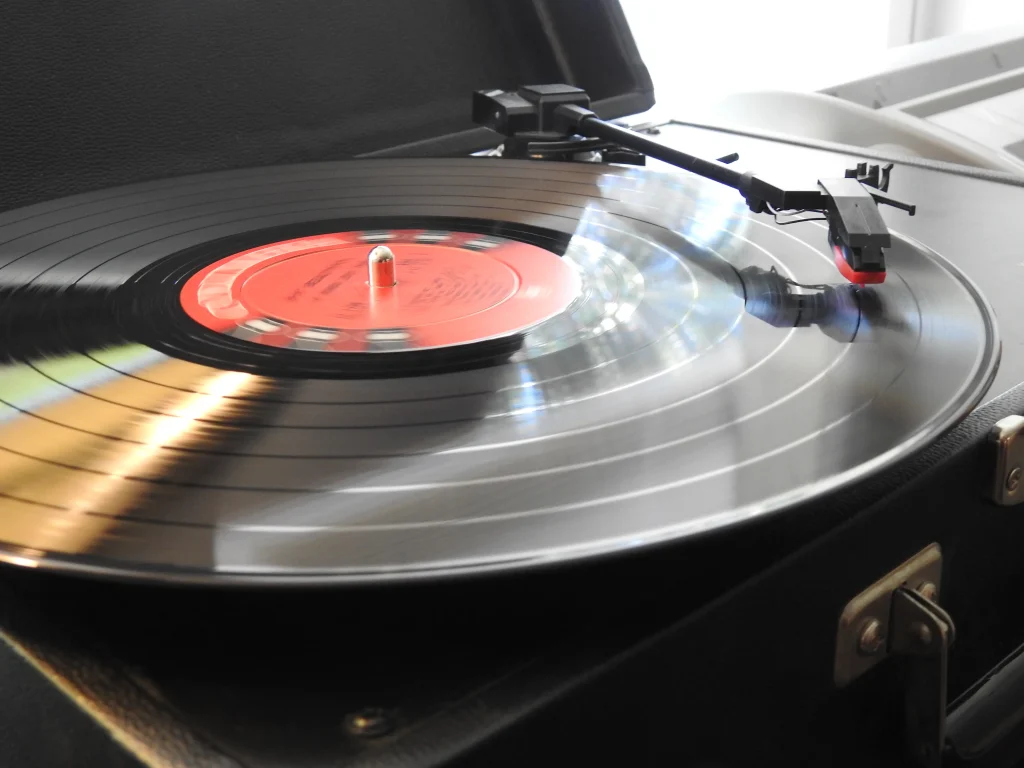
A vintage turntable can sound better than most budget modern decks — or it can sound worse than a phone speaker, depending on how it was stored and what’s actually inside the cartridge. Here’s how to tell the difference before you buy.
What to Look For
- Belt-drive vs. direct-drive — belt-drive is quieter, direct-drive is more durable for DJ-style use
- Stylus and cartridge condition — a worn stylus damages records
- Platter spins true, with no wobble
- Tonearm counterweight and anti-skate still adjustable
- Plinth (base) isn’t warped or cracked
Our Pick: A Belt-Drive Manual Turntable
A well-maintained belt-drive manual turntable from the late 1970s to mid-1980s remains the best entry point. The belt-drive motor isolates the platter from motor vibration, and manual models have fewer parts that can fail compared to fully automatic decks.
THE VERDICT
- Drive Type: Belt-drive, manual
- Cartridge: New or recently replaced
- Wow & Flutter: 0.1% or better
- Condition: Belt and stylus replaced
Best for: first-time vinyl buyers who want honest sound without a big investment.
Pros & Cons
Pros
- Fewer moving parts than automatic decks
- Belt-drive isolates motor noise well
- Replacement cartridges are cheap and easy to find
Cons
- Manual cueing means you can’t walk away mid-side
- Belts dry out and need replacing every 5–10 years
Always ask the seller when the stylus was last replaced — it’s the single biggest factor in both sound quality and whether your records survive the experience.