
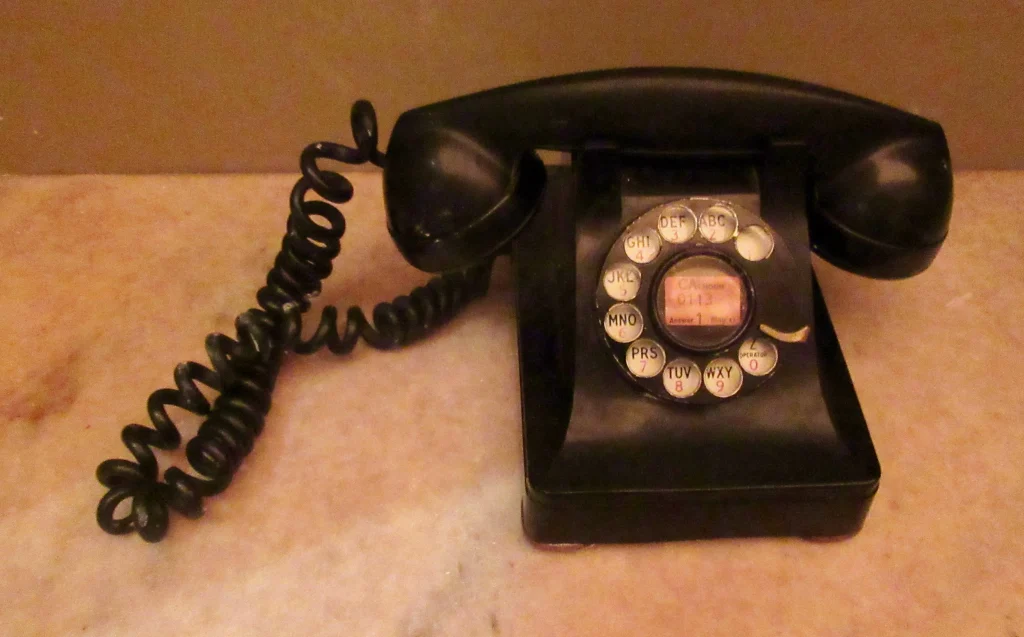
A vintage rotary phone makes a great display piece — and with a simple adapter, plenty of them can actually still make calls. Here’s what separates a phone worth buying from one that’s just a paperweight.
What to Look For
- Dial returns smoothly to rest after each pull, with no sticking
- Cord and handset cord aren’t cracked or brittle
- Ringer actually rings when tested, not just silent internals
- Whether it’s already been converted to a modern RJ11 jack
- Housing isn’t cracked, and original finish hasn’t been stripped or repainted
Our Pick: A Western Electric-Style Model Converted for Modern Use
A solidly built rotary phone that’s already been fitted with a modern jack adapter gives you the best of both worlds — genuine vintage looks and mechanical dialing, with the ability to actually plug it in and use it today.
THE VERDICT
- Dial: Smooth return, no sticking
- Jack: Converted to modern RJ11
- Ringer: Tested and working
- Finish: Original, uncracked housing
Best for: anyone who wants a genuinely usable landline phone with real vintage character.
Pros & Cons
Pros
- Extremely durable mechanical design — many still work after 50+ years
- Modern jack adapters are cheap and simple to install
- Genuinely louder, clearer ring than most modern phones
Cons
- Rotary dialing won’t work with phone menus that require tone dialing
- Unconverted models need a separate pulse-to-tone adapter to work on modern lines
If you plan to actually use it, ask the seller directly whether the conversion has been done — it’s a five-minute job, but it’s much easier to buy one already converted.