
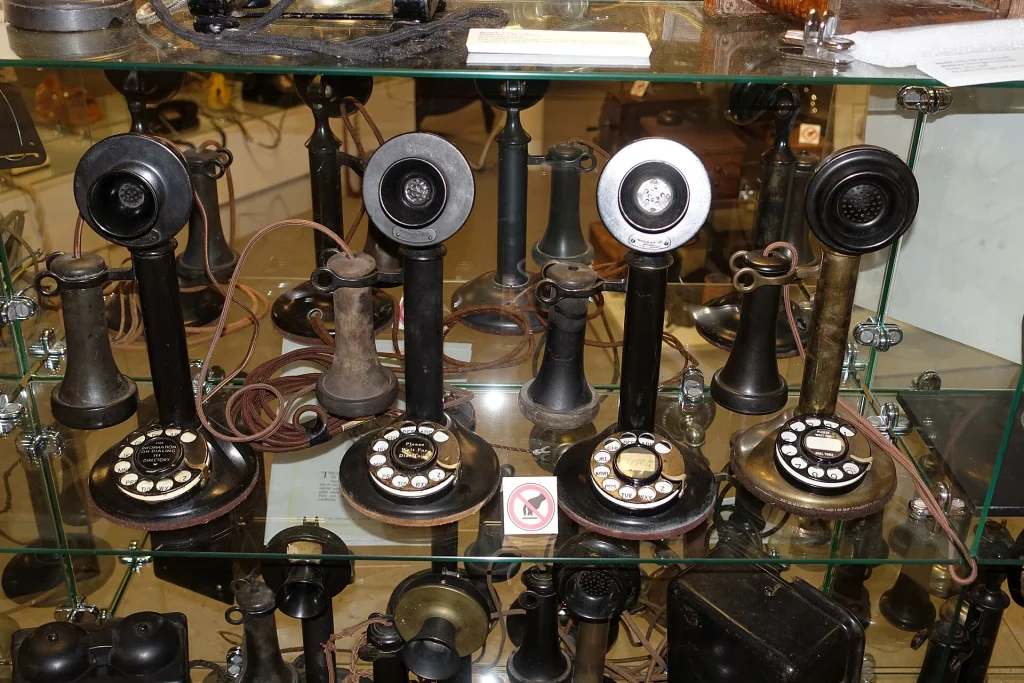
The candlestick telephone and the oak wall phone are the two great shapes of early telephony, in use from the 1890s into the 1930s. Originals are well made, heavy and very decorative. They were also widely reproduced from the 1970s onward, so the first job of any buyer is to work out what is actually on offer.
What to Look For
- Maker’s name and patent dates are stamped on the metal parts, as on original phones
- Receiver, transmitter and cords are all present
- Separate ringer box is included with a candlestick, since the phone itself has no bell
- Finish shows honest age and has not been stripped to bare polished brass
- Wooden wall phones still have their internal parts and have not been gutted
Popular Models Worth Seeking Out
A handful of American makers produced most of the phones you will see.
- Western Electric candlesticks (20AL without dial, 51AL with dial) — the standard Bell System models and the most collected.
- Kellogg and Stromberg-Carlson candlesticks — made for independent telephone companies, with their own distinctive shapes.
- Western Electric 317 and similar oak wall phones — hand-cranked sets used on rural lines, in a handsome wooden cabinet.
- Automatic Electric dial candlesticks — early dial phones, scarce and valuable.
- Western Electric 202 desk set — the 1930s successor to the candlestick, with a one-piece handset.
Our Pick: An Original Western Electric Candlestick with Its Ringer Box
An original Western Electric candlestick with matching ringer box is the classic choice. It is well documented, parts are available, and with the box connected it can still take calls.
THE VERDICT
- Authenticity: Original, with maker’s marks
- Receiver: Included, cord intact
- Ringer Box: Included
- Finish: Original, honest wear
Best for: collectors and decorators who want a true antique telephone, for display or as a working conversation piece.
Pros & Cons
Pros
- A striking display piece with real history
- Heavy, durable construction in steel and brass
- Can be made to work on a modern line
Cons
- Reproductions and phones built from mixed parts are common
- Will not ring or work properly without its separate ringer box
Common Problems to Watch For
- Reproduction sold as original — later copies often have plastic parts, modern cords and no maker’s markings.
- Missing ringer box — the candlestick alone is incomplete, and the box adds to the cost.
- Frayed cloth cords — original cords are fragile. Reproduction cloth cords are available.
- Stripped finish — many were originally black or nickel plated. Polishing to bright brass lowers the value to collectors.
- Gutted wall phones — cabinets emptied and turned into radios or shelves.
How Much Should You Expect to Pay
- $60–$150: Reproductions and incomplete phones
- $150–$300: Original candlesticks without a dial
- $250–$500: Complete oak wall phones
- $400+: Dial candlesticks and phones by scarcer makers
Quick Questions, Answered
Can an antique phone work today?
Often, yes. With its ringer box wired in, a candlestick can receive calls, and dial models can place them on lines that still accept pulse dialing.
How can I spot a reproduction?
Look for maker’s names and patent dates on the metal, weigh it in your hand and check the cords. Originals are heavy and clearly marked.
Why is there no bell inside?
Early phones kept the bell and other electrical parts in a separate wooden or metal box mounted on the wall.
Ask for close-up photos of every stamped marking and of the inside of the base. Sellers of genuine phones are glad to show them, and the markings tell you the maker and model.