
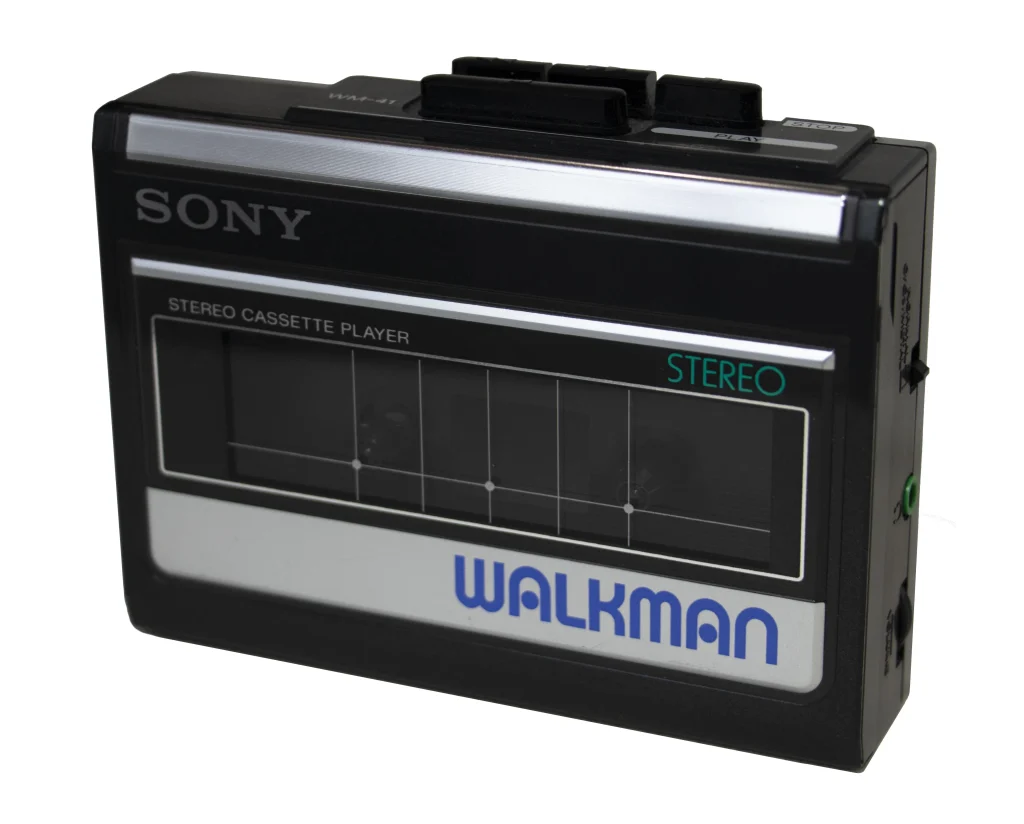
A portable cassette player from the 1980s or 90s can still deliver a genuinely great listening experience — warm, private, and satisfyingly mechanical. But these little machines took a beating from decades of pockets, backpacks, and jogging. Here’s what to check before you buy one.
What to Look For
- Belt condition — the internal rubber drive belt dries out and snaps with age
- Auto-reverse function actually flips and plays side B
- Headphone jack isn’t loose or crackling
- Battery compartment free of corrosion from old leaked batteries
- Playback speed is stable, with no wow or flutter (warbling pitch)
Our Pick: A Serviced Auto-Reverse Cassette Walkman
Look for a personal cassette player that’s had its belt replaced and its playback speed verified against a known-good tape. Auto-reverse models from the late 80s onward are usually the sweet spot — mature enough to be reliable, common enough that parts and belts are still easy to source.
THE VERDICT
- Belt: Replaced
- Auto-Reverse: Tested working
- Headphone Jack: Clean, no crackle
- Speed: Verified against reference tape
Best for: anyone who wants the real Walkman experience — mixtapes, headphones, and a machine you can actually take on a walk.
Pros & Cons
Pros
- Genuinely pocketable, unlike a full-size deck
- Runs on cheap AA batteries — no proprietary charger to hunt down
- Auto-reverse means you don’t have to flip the tape by hand
Cons
- Belts are a wear item — budget for a replacement every several years
- Sound quality can’t match a full-size home deck
Bring headphones to test it in person if you can — a quick listen tells you more about belt and speed condition than any seller description will.