
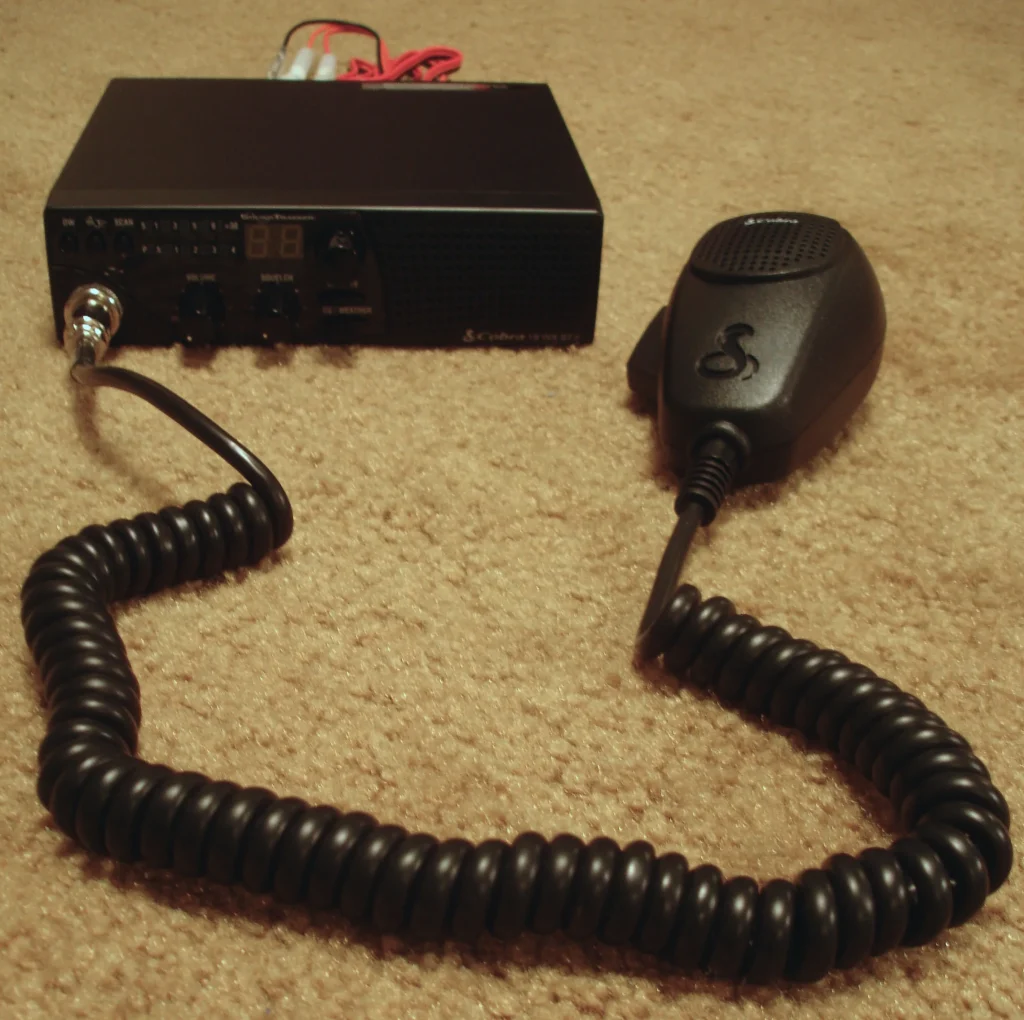
CB radio never really went away — it’s still legal to use license-free in most countries, still useful for convoy and off-road communication, and vintage units are often better built than a lot of what’s sold new today.
What to Look For
- Confirm it covers the full legal 40-channel range for your country
- SWR meter or the ability to check SWR before transmitting — protects the radio from damage
- Microphone works cleanly with no static or dropouts
- Squelch control functions smoothly
- Power output matches local legal limits
Our Pick: A 40-Channel Base Station
A 40-channel base station from a well-known manufacturer is the most forgiving starting point. Base stations are simpler electrically than mobile units wired into a vehicle, and parts/manuals for popular models are still easy to find decades later.
THE VERDICT
- Channels: Full 40-channel range
- Type: Base station
- Mic: Tested, no static
- SWR: Checkable before transmitting
Best for: beginners setting up their first home base station.
Pros & Cons
Pros
- No license required in most countries for CB use
- Base stations are simpler to set up than vehicle installs
- Well-built vintage units often outlast cheap new ones
Cons
- Needs a proper antenna setup to perform well
- Range is limited compared to modern digital alternatives
Never transmit without checking SWR first on an unfamiliar radio — a bad antenna match can damage the final transistor stage in minutes.