
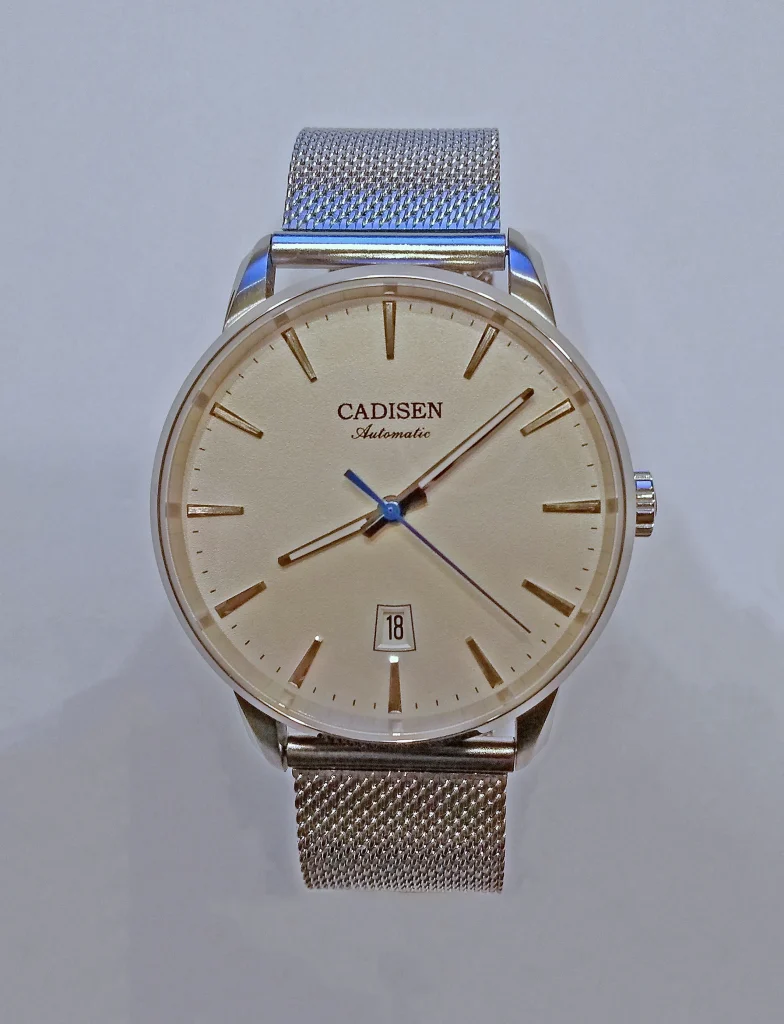
Buying a 40-year-old mechanical watch is nothing like buying a new one — the movement’s service history matters more than the dial’s condition, and a beautiful case can be hiding a movement that’s about to stop for good.
What to Look For
- Ask when the movement was last serviced — 5+ years ago is a red flag
- Manual-wind vs. automatic — manual has fewer parts to wear out
- Crown winds smoothly with no grinding
- Case back isn’t over-polished, which can round off original edges
- Dial and hands match in age and finish — mismatched parts suggest a Frankenwatch
Our Pick: A Recently Serviced Manual-Wind Watch
A manual-wind watch with documented recent servicing is the safest entry point. Manual movements have fewer components than automatics, meaning less that can go wrong, and a fresh service means you’re not inheriting someone else’s deferred maintenance.
THE VERDICT
- Movement: Manual-wind
- Service: Documented, within 2 years
- Case: Original finish, not over-polished
- Accuracy: Within a few minutes/day
Best for: first-time vintage watch buyers who want something they can actually wear daily.
Pros & Cons
Pros
- Fewer components than automatic movements
- Winding daily connects you to the object in a way quartz doesn’t
- Generally easier and cheaper to service
Cons
- Requires daily winding or it stops
- Servicing every few years is an ongoing cost to budget for
If a seller can’t tell you anything about the service history, price in a full service yourself — it typically costs more than a cheap unserviced watch saves you upfront.