
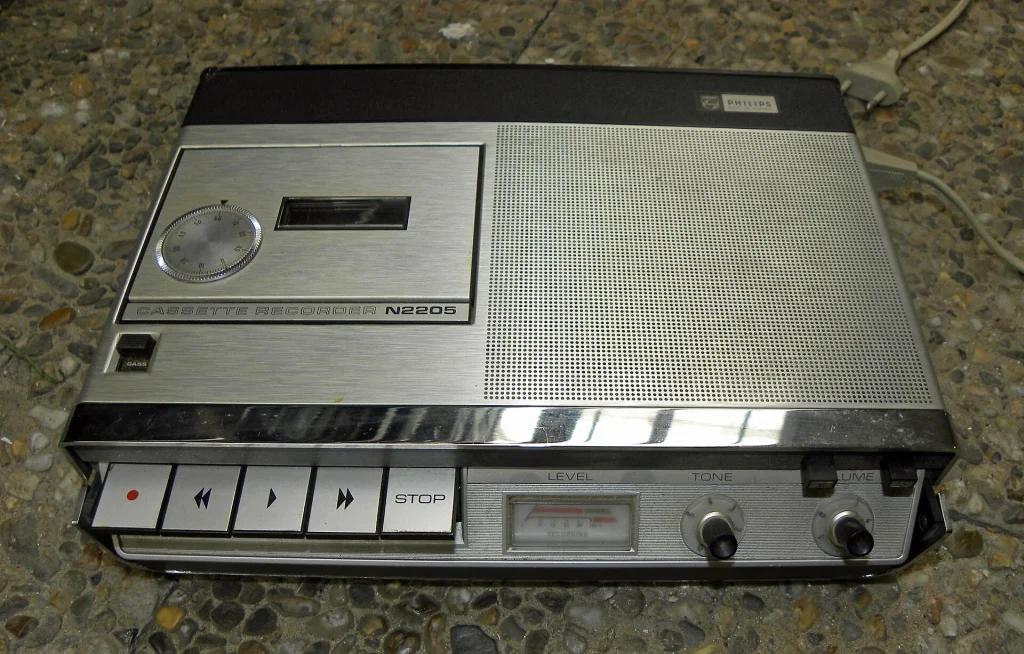
The flat, top-loading cassette recorder with a row of piano keys along the front is one of the most familiar machines of the tape era. Schools, offices and bedrooms were full of them. They are cheap, simple and surprisingly useful today for lo-fi recording, voice notes and loading software on vintage home computers.
What to Look For
- Plays, records, rewinds and fast-forwards, with every key latching and releasing properly
- Built-in microphone records clearly, and the speaker plays back without distortion
- Tape speed is steady, with no wobble on sustained notes
- Battery compartment is clean, and the power cord or adapter is included
- Record safety interlock works, so a protected tape cannot be erased by accident
Popular Models Worth Seeking Out
Nearly every electronics company made one, but a few names are worth searching for.
- Panasonic RQ series (RQ-2102, RQ-309) — the classic shoebox recorder, made for decades and very dependable.
- Sony TCM series (TCM-737, TCM-939) — well built, with good microphones and clear speakers.
- General Electric 3-5000 series — common in the United States, basic and inexpensive.
- Marantz PMD series (PMD-221, PMD-222) — professional portables used by reporters. A big step up in quality and price.
- Radio Shack Realistic CTR and CCR series — plentiful, and the computer cassette recorder models are popular with vintage computer owners.
Our Pick: A Tested Panasonic or Sony Shoebox Recorder
A working Panasonic RQ or Sony TCM is all most people need. They are simple, the belts are easy to replace, and good ones cost less than a handful of blank tapes.
THE VERDICT
- Belt: Replaced or running true
- Recording: Tested with the built-in mic
- Speaker: Clear
- Power: Mains and battery both working
Best for: anyone who wants a simple, tough recorder for voice notes, lo-fi music or loading programs on old computers.
Pros & Cons
Pros
- Very cheap to buy and run
- Self-contained, with microphone and speaker built in
- Simple mechanics that are easy to service
Cons
- Mono only, with limited sound quality
- Most set the recording level automatically, so you cannot adjust it
Common Problems to Watch For
- Stretched or perished belt — slow, wobbly playback or no movement at all. A replacement belt costs a few dollars.
- Dirty heads — dull, muffled sound. Clean them with isopropyl alcohol and a cotton swab.
- Hardened pinch roller — uneven speed, or tapes that get chewed.
- Corroded battery contacts — common after years of storage with batteries inside.
- Noisy motor — a whine or hum that gets onto recordings as the motor ages.
How Much Should You Expect to Pay
- $10–$25: Untested, sold as-is
- $25–$50: Tested and working
- $50–$90: Serviced or boxed examples
- $150+: Marantz PMD professional recorders
Quick Questions, Answered
Can I use one to load programs on a vintage computer?
Yes. Many 1980s home computers loaded software from ordinary cassette recorders through the earphone and microphone jacks.
Does it record in stereo?
No. Shoebox recorders are mono, and they play stereo tapes as mono.
Can I record from another device?
Usually. Most have a 3.5mm microphone or auxiliary input alongside the built-in mic.
Ask the seller to record a few seconds of speech and play it back on video. That one clip proves the record, erase and playback functions all work.