
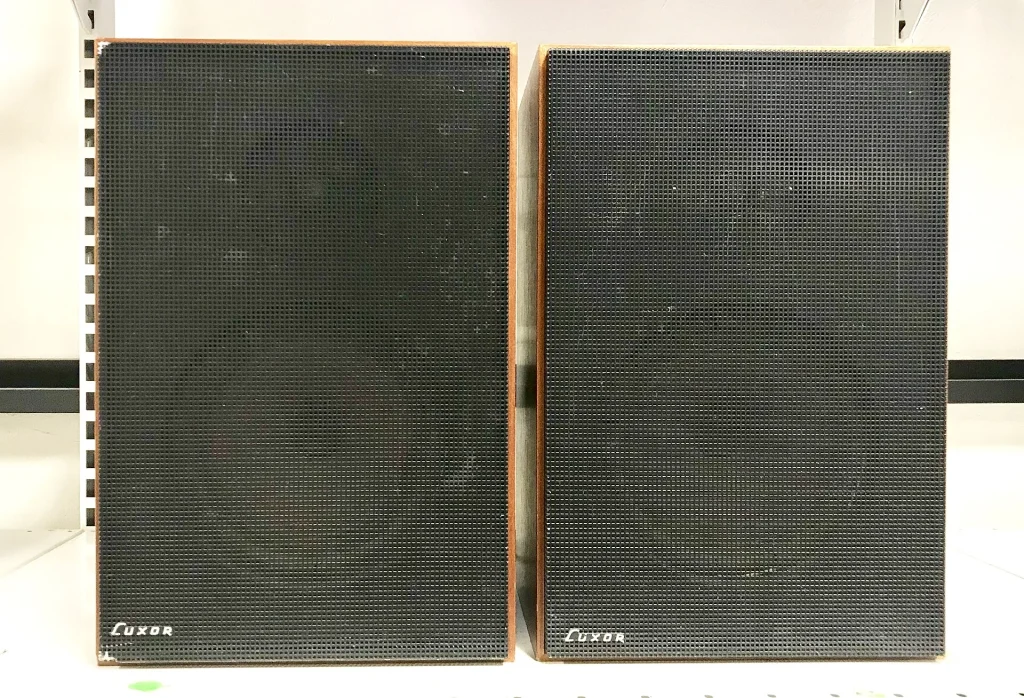
The speakers shape the sound of a vintage system more than any other component. American bookshelf designs from the 1960s and 70s gave deep bass from modest wooden boxes, and the best of them still sound excellent. Rubber and foam parts age, though, so a pair that looks perfect may need work before it sings.
What to Look For
- Woofer surrounds are intact, and any foam surrounds are fresh or recently replaced
- Every driver works: listen for a working tweeter and woofer in both speakers
- Drivers are original and match between the two cabinets
- Cabinets are solid, with no water damage, swollen corners or lifting veneer
- Grilles and badges are present, and the terminals are tight
Popular Models Worth Seeking Out
These designs sold in large numbers, so drivers, repair kits and advice are all easy to find.
- Acoustic Research AR-4x and AR-3a — the pioneers of the sealed acoustic suspension design, with smooth, natural sound.
- Advent Loudspeaker (Large and Smaller Advent) — hugely popular and still a bargain, though the woofers almost always need new foam.
- KLH Model Six and Model Seventeen — warm, balanced two-way speakers with durable cloth surrounds.
- JBL L26 Decade and L100 Century — a livelier, punchier sound. The L100 is a collector favorite and priced like one.
- Dynaco A-25 — a Scandinavian-built design with a relaxed, open sound, often inexpensive.
Our Pick: A Serviced Pair of Two-Way Sealed Bookshelf Speakers
A two-way pair from Advent, KLH or Acoustic Research is the sensible choice. They work well with modest receivers, replacement parts are plentiful, and a pair with fresh surrounds should play for another twenty years.
THE VERDICT
- Surrounds: Intact or replaced
- Drivers: All original and working
- Cabinets: Solid, light wear
- Grilles: Included
Best for: listeners pairing speakers with a vintage receiver in a small or medium-sized room.
Pros & Cons
Pros
- Warm, full sound from a compact cabinet
- Real wood veneer cabinets on most models
- Straightforward to repair, with kits widely available
Cons
- Foam surrounds perish and need replacing every couple of decades
- Heavy for their size, and easily damaged in shipping
Common Problems to Watch For
- Rotted foam surrounds — the ring around the woofer crumbles, causing buzzing and weak bass. Refoam kits are inexpensive.
- Dead tweeter — no treble from one speaker. Often caused by too much power.
- Aged crossover capacitors — dull or uneven sound. Replacing them is a common restoration step.
- Corroded level controls — the tweeter cuts in and out as you turn the knob on older AR and KLH models.
- Pushed-in dust caps — cosmetic in most cases, and usually possible to pull back out gently.
How Much Should You Expect to Pay
- $40–$100: Pairs that need new surrounds or other work
- $100–$250: Working pairs from Advent, KLH and Dynaco
- $250–$500: Restored Acoustic Research and smaller JBL models
- $500+: JBL L100, AR-3a and other sought-after pairs
Quick Questions, Answered
Can I replace foam surrounds myself?
Yes. Kits include the foam and glue, and a careful beginner can finish a pair in an afternoon.
How much amplifier power do they need?
Most are happy with 20 to 60 watts per channel. Sealed designs are a little less efficient, so very low-powered amplifiers can struggle.
Do I need special speaker wire?
No. Ordinary 16-gauge speaker wire is fine for normal room lengths.
Ask for photos with the grilles removed. Grille cloth hides rotted surrounds, replaced drivers and dented cones, and an honest seller will not mind taking them off.