
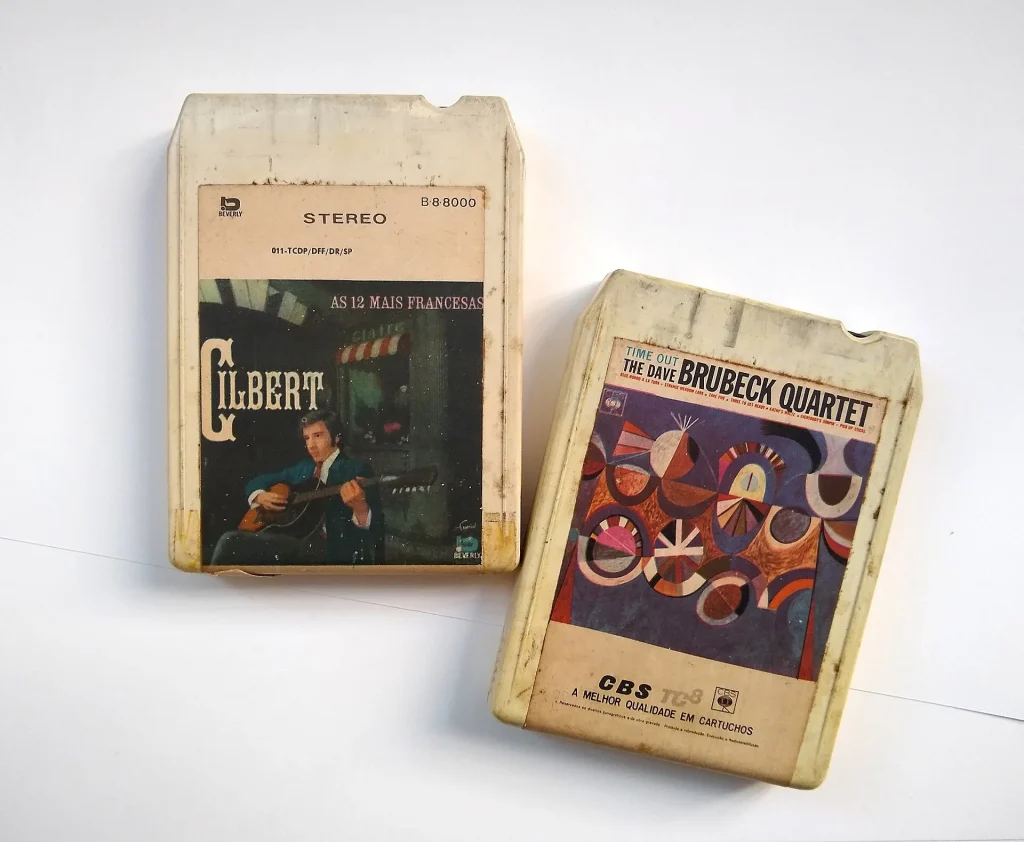
The 8-track cartridge ruled car dashboards and living rooms from the mid-1960s to the late 1970s. It is an endless loop of tape in a chunky plastic shell, and it changes programs with a loud clunk, sometimes in the middle of a song. Tapes are cheap and plentiful, but nearly all of them need a little repair before they play.
What to Look For
- Pressure pad inside the cartridge is intact or has been replaced
- Foil sensing splice is holding, since it joins the loop and triggers the program change
- Tape is not loose, wrinkled or pulled out at the opening
- Player plays all four programs and changes between them
- Rubber pinch roller in the cartridge is firm, not gooey or cracked
Popular Models Worth Seeking Out
Players came in home decks, portables and all-in-one stereos, and these are the ones collectors look for.
- Panasonic RQ-830S — the portable shaped like a detonator, with a plunger to change programs. The most recognizable 8-track player made.
- Pioneer H-R100 and Akai CR-81D — home decks that can record as well as play.
- Weltron 2001 — the space-age ball-shaped radio and 8-track player. A design icon.
- Realistic and Panasonic home decks — plain, common and usually the cheapest way to play tapes through a stereo.
Our Pick: A Tested Home 8-Track Deck
Start with a tested home deck that plugs into a receiver, then buy tapes that have already had new pads and splices fitted. It costs a little more than a thrift-store gamble, and you get music on day one.
THE VERDICT
- Playback: All four programs
- Program Change: Working
- Belt: Replaced
- Head: Cleaned and aligned
Best for: collectors who enjoy the format’s quirks and want cheap albums with real 1970s character.
Pros & Cons
Pros
- Tapes often cost only a dollar or two each
- Simple mechanisms that are easy to repair
- A huge catalog of 1960s and 70s albums
Cons
- Almost every tape needs a new pad and splice before it plays reliably
- No rewind, and songs are sometimes split across two programs
Common Problems to Watch For
- Crumbled pressure pad — the foam pad that holds tape against the head turns to dust, giving muffled or missing sound.
- Failed foil splice — the loop comes apart and the tape disappears into the shell. New foil splices are cheap.
- Melted pinch roller — on some brands the rubber roller turns to sticky goo and must be replaced.
- Stretched player belt — slow or wavering playback.
- Crosstalk — hearing a faint second program underneath, caused by a misaligned head.
How Much Should You Expect to Pay
- $1–$5: Common tapes, sold as found
- $20–$50: Basic players, tested
- $50–$150: Serviced decks and working portables
- $150+: Weltron and other design pieces, quadraphonic tapes and rare late releases
Keeping 8-Tracks Playable
- Keep tapes out of heat, which warps shells and softens rollers
- Clean the player’s head and capstan regularly, because old tape sheds oxide
- Play tapes now and then so the loop does not set in one position
Quick Questions, Answered
Can I repair a tape myself?
Yes. Replacement pads and foil splices are sold in kits, and most cartridges open with a little care.
Why does the music fade out and click in the middle of a song?
The tape has reached the end of the loop, and the player is moving its head to the next of the four programs.
Can I rewind an 8-track?
No. The loop only runs one way. Some decks have fast-forward.
Price tapes as if every one needs a pad and splice, because most do. Sellers who state that the work has been done are worth the extra dollar or two per tape.