
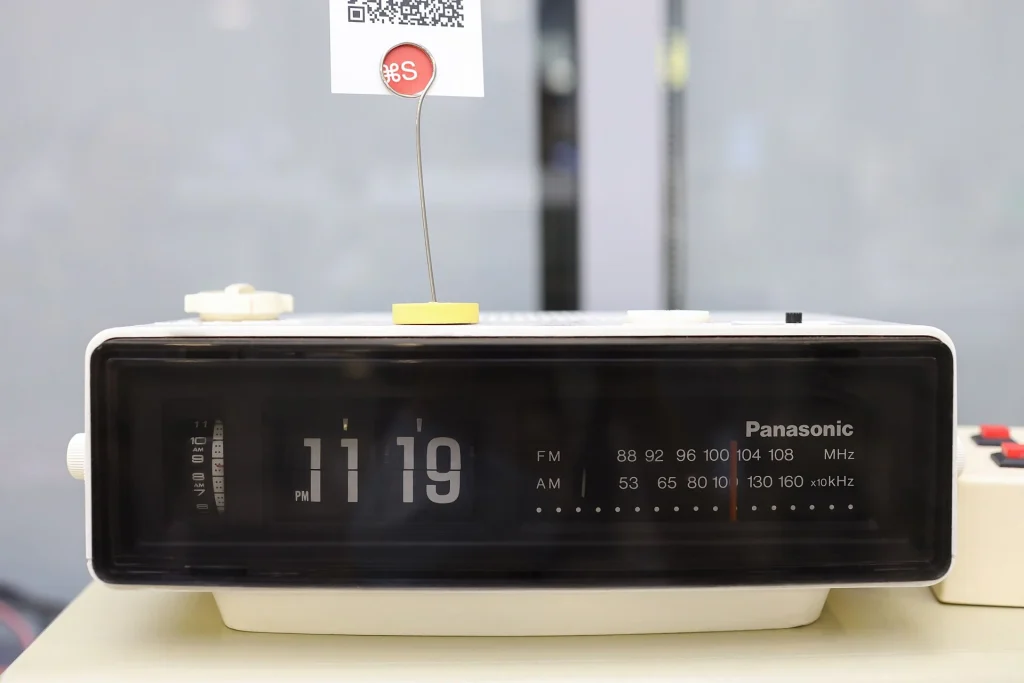
The flip clock radio was the bedside clock of the 1970s: numbers on little hinged plates that drop with a soft click each minute, lit by a warm glow, with a radio built in. They are simple, charming and usually inexpensive. The mechanism is the part that fails, so that is where to look first.
What to Look For
- Flaps turn over cleanly every minute and on the hour, with none missing or cracked
- Clock keeps accurate time over at least a day
- Alarm triggers at the set time, and the sleep and snooze functions work
- Radio receives stations clearly and the volume control is quiet
- Voltage and mains frequency match your country, since the clock motor depends on them
Popular Models Worth Seeking Out
Japanese makers led this category, and their clocks are the ones most often found still working.
- Sony Digimatic series (8FC-59W and similar) — the best-known flip clock radios, with solid build and clean styling.
- Panasonic RC series (RC-6015, RC-6030) — dependable clocks in a wide range of case designs.
- General Electric flip clock radios — very common in the United States and usually the cheapest working option.
- Copal standalone flip clocks — no radio, but the flip mechanism in its purest form.
Our Pick: A Tested Sony or Panasonic Flip Clock Radio
A tested mains-powered model from Sony or Panasonic is the reliable choice. Their flip mechanisms tend to outlast the cheaper designs, and the radios are good enough for daily use.
THE VERDICT
- Flaps: All present, flipping cleanly
- Timekeeping: Accurate over 24 hours
- Alarm: Tested working
- Radio: AM and FM working
Best for: anyone who wants a bedside clock with real 1970s character that still wakes you up on time.
Pros & Cons
Pros
- Distinctive looks and a satisfying mechanical action
- Inexpensive compared with most vintage electronics
- Useful as an everyday clock and radio
Cons
- A faint motor hum and the click of the flaps can bother light sleepers
- Tied to the mains frequency it was built for
Common Problems to Watch For
- Noisy or seized motor — dried lubricant makes the synchronous motor buzz or stop. Cleaning and a drop of light oil often revives it.
- Flaps sticking or dropping in pairs — caused by dirt, warped flaps or a worn retaining tab.
- Dead display lamp — the small bulb that lights the numbers burns out. Replacements are cheap.
- Scratchy volume or tuning — dirty controls, usually cured with contact cleaner.
- Brittle or yellowed plastic — cases and flaps discolor and crack with heat and sunlight.
How Much Should You Expect to Pay
- $20–$40: Untested, sold as-is
- $40–$80: Working models from General Electric and similar brands
- $80–$150: Tested Sony and Panasonic models in clean condition
- $150+: Boxed examples and sought-after space-age designs
Quick Questions, Answered
Will it work in my country?
Check the label. The clock motor is synchronized to mains frequency, so a 60Hz clock runs slow on 50Hz power, and a voltage converter alone will not correct it.
Is the noise a problem at night?
Most people stop noticing the soft click within a few days. A loud buzz means the motor needs attention.
Can a broken flip mechanism be repaired?
Often, yes. Most faults are dirt and old grease, though broken flaps need a donor clock.
Ask the seller to film the clock passing the top of an hour. That moment turns the minute and hour flaps together and shows straight away whether the mechanism is healthy.