
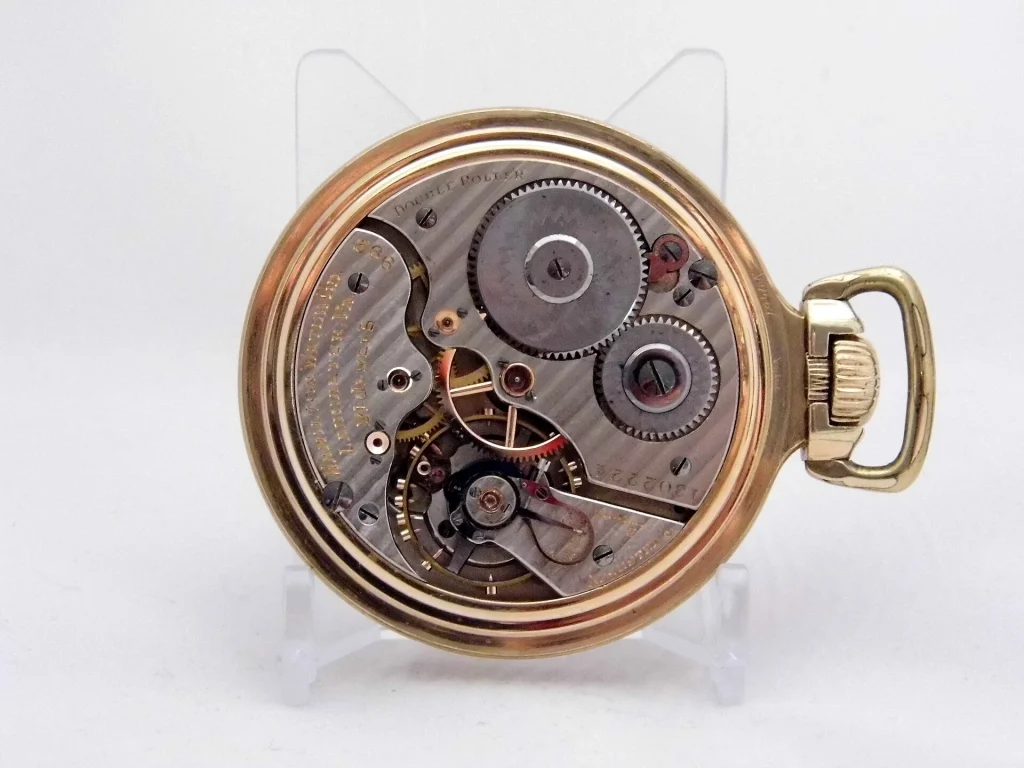
American pocket watches from roughly 1890 to 1950 are among the best-made mechanical objects you can buy for the money. Millions were produced to very high standards, and many still run well a century later. Condition and service history matter far more than age, so here is what to check.
What to Look For
- Watch winds, sets and runs, and the seller states how well it keeps time
- Dial is free of hairline cracks and chips, or the price reflects them
- Movement is clean, with no rust, and the serial number is visible
- Case material is identified: gold-filled, silver, nickel or solid gold
- Crystal is clear and the hands match each other in style
Popular Models Worth Seeking Out
The big American factories made excellent watches at every price, and their serial numbers make dating simple.
- Hamilton 992 and 992B — the benchmark railroad watch: 21 jewels, superbly finished and very accurate.
- Elgin B.W. Raymond and Father Time — high-grade railroad watches from the largest American maker.
- Waltham Vanguard and Riverside — finely made movements with a long production history.
- Illinois Bunn Special — highly regarded by collectors for quality and accuracy.
Our Pick: A Serviced 16-Size Railroad-Grade Pocket Watch
A 16-size railroad-grade watch from Hamilton, Elgin or Waltham is the ideal first purchase. These were precision instruments built for daily use, parts are plentiful, and a serviced example will usually keep time to within half a minute a day.
THE VERDICT
- Movement: Serviced, running
- Jewels: 17 to 21
- Dial: Clean, no major cracks
- Case: Gold-filled, light wear
Best for: anyone who wants a piece of working mechanical history they can wind, carry and hand down.
Pros & Cons
Pros
- Outstanding build quality for the price
- Easy to date and research by serial number
- Many watchmakers can still service them
Cons
- Needs servicing every several years, which can cost as much as the watch
- Not water resistant or shock protected
Common Problems to Watch For
- Overdue service — dried oil makes a watch run slow or stop, and running it in that state causes wear.
- Broken balance staff — the most common result of a drop. The watch will not run at all.
- Hairline cracks in the dial — fine lines in enamel dials that lower value but do not affect function.
- Worn-through gold-filled case — brass showing at the edges and hinges.
- Mismatched case and movement — common, since they were often sold separately. It matters mainly to collectors.
How Much Should You Expect to Pay
- $50–$120: Running 7 to 15-jewel watches in worn cases
- $120–$300: Clean 17-jewel watches from the main American makers
- $300–$600: Serviced 21-jewel railroad-grade watches
- $600+: Solid gold cases, rare grades and top-condition examples
Looking After a Pocket Watch
- Wind it fully once a day, at about the same time
- Keep it away from water, magnets and hard knocks
- Have it cleaned and oiled by a watchmaker every five years or so if you carry it regularly
Quick Questions, Answered
What does railroad grade mean?
It describes watches that met railroad timekeeping rules: typically an open face, at least 17 jewels, lever setting, bold Arabic numerals and adjustment to several positions.
How do I find out how old it is?
Look up the serial number on the movement, not the case. Free online databases list production dates for all the major American makers.
What is the difference between open-face and hunter-case?
An open-face watch has no cover over the dial. A hunter-case watch has a hinged metal lid that springs open.
Always ask for a clear photo of the movement. The grade, jewel count and serial number are engraved there, and they tell you exactly what you are buying.