
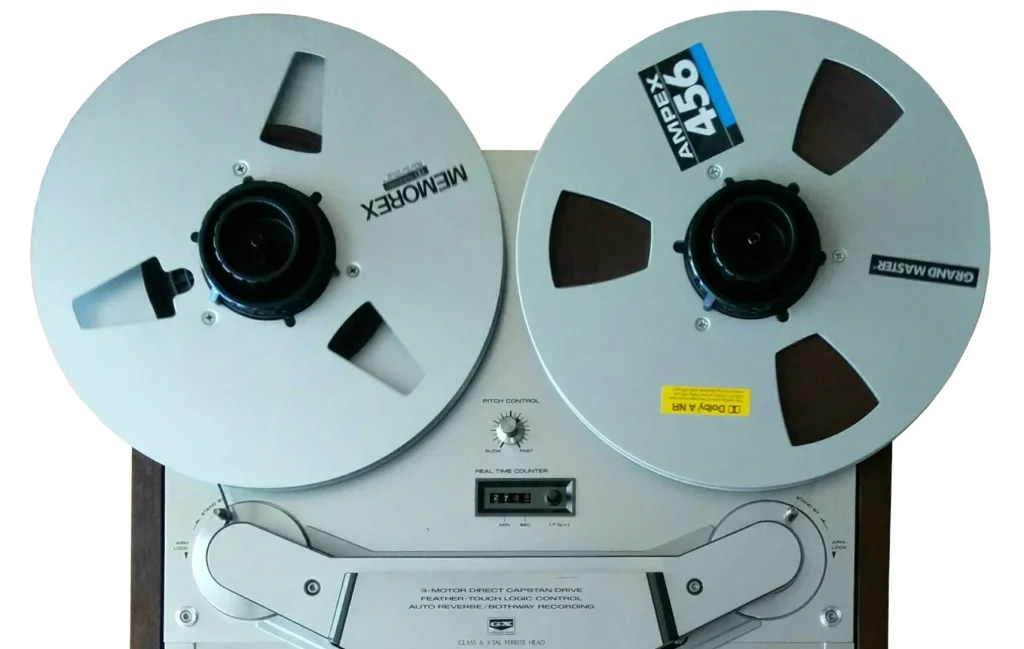
Open-reel tape still offers some of the best analog sound you can get at home, but buying tape is trickier than buying cassettes. Some older formulations have broken down chemically and will gum up a deck in minutes. Knowing which brands and eras to trust saves both money and tape heads.
What to Look For
- Tape width and reel size match your deck: most home machines use quarter-inch tape on 7-inch reels, and larger decks take 10.5-inch reels
- Brand and formulation are not known for sticky-shed syndrome
- Tape pack is smooth and even, with no warping, ridges or white powder
- Reels are flat and uncracked, and boxes show no water or mold damage
- Seller states whether the tape is new, sealed old stock or used
Popular Models Worth Seeking Out
A few names are consistently safe choices, either newly made or from eras that have aged well.
- RTM (Recording The Masters) SM900 and LPR35 — currently manufactured tape, made in France. The dependable choice for important recordings.
- ATR Magnetics Master Tape — new American-made tape with a strong reputation in studios.
- Maxell UD and XL series — older tape that has generally aged very well and is easy to find used.
- TDK Audua, and BASF LH and LP35 — well regarded used stock that rarely suffers from sticky-shed.
Our Pick: New-Manufacture Tape on a 7-Inch Reel
For anything you care about, new tape removes the guesswork. A 7-inch reel of long-play tape from a current maker fits nearly every home deck and gives you a known, stable formulation.
THE VERDICT
- Type: New-manufacture quarter-inch tape
- Reel: 7-inch
- Sticky-Shed Risk: None
- Condition: Sealed
Best for: owners of a quarter-inch open-reel deck who want reliable tape for recording without the sticky-shed gamble.
Pros & Cons
Pros
- Predictable performance and no chemical breakdown
- Fits almost every consumer open-reel deck
- Can be recorded over many times
Cons
- New tape costs much more than used reels
- Fewer formulations to choose from than in the past
Common Problems to Watch For
- Sticky-shed syndrome — the binder absorbs moisture and turns gummy, leaving residue on heads and guides. Many back-coated Ampex and Scotch tapes from the mid-70s to the 90s are affected.
- Loss of lubricant — some older tapes squeal as they pass over the heads.
- Brittle acetate tape — very old tape can snap or curl. Hold the reel up to a light: acetate lets light through the pack, polyester does not.
- Edge damage and poor winding — causes dropouts and uneven sound in one channel.
- Mold — white or grey spots on the edges of the pack after damp storage. Avoid it.
How Much Should You Expect to Pay
- $5–$15: Used 7-inch reels, often with old recordings on them
- $15–$30: Sealed new-old-stock 7-inch reels from trusted brands
- $35–$60: New-manufacture 7-inch reels
- $70–$110: New-manufacture 10.5-inch reels
Storing Reel Tape
- Store reels upright in their boxes, away from heat and damp
- Leave tapes wound tails-out after playing for an even pack
- Keep them away from speakers and other strong magnets
- Clean the heads and guides after playing any unknown used tape
Quick Questions, Answered
What is sticky-shed syndrome?
A chemical breakdown of the tape binder in certain formulations. The tape sheds sticky residue, squeals and can stall the deck.
Can sticky tape be saved?
Recordings can often be recovered by carefully baking the tape at low heat, but it is a temporary fix, and such tape should not be used for new recordings.
Can I record over used tape?
Yes, if it is a stable formulation in good physical condition. The deck erases it as you record.
When a listing shows a mixed lot of reels, read the brand on every box before bidding. One or two sticky-shed tapes in a lot are fine, but a whole box of them is only worth the empty reels.