
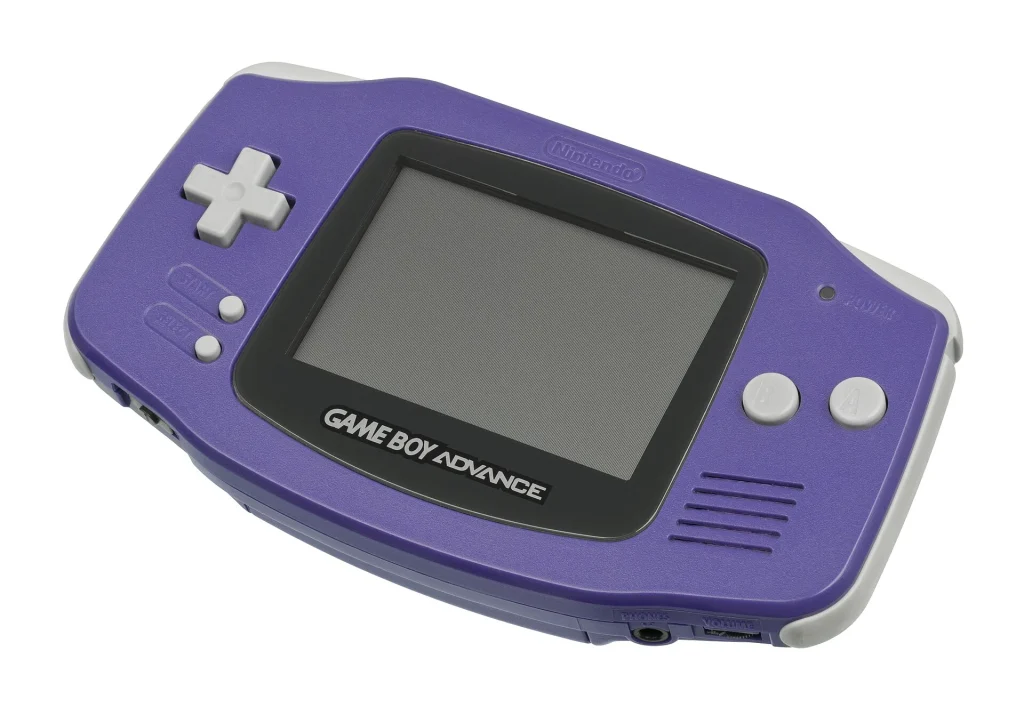
Handheld consoles are the easiest way into retro gaming. They need no television, the games are small and easy to store, and the Game Boy line alone has thousands of titles. They also lived in schoolbags for years, so screens, speakers and battery contacts need a close look.
What to Look For
- Screen is free of dead lines, dark blotches and deep scratches on the lens
- Battery contacts are clean, with no green or white corrosion
- All buttons and the D-pad respond crisply, and the volume control works without crackle
- Cartridge slot reads games reliably without repeated reseating
- Shell and screen are original, or the listing clearly states what has been replaced or modified
Popular Models Worth Seeking Out
Nintendo’s handhelds are the safe choice for game library and durability, with a couple of rivals for the curious.
- Game Boy Advance SP (AGS-001 and AGS-101) — folding design, rechargeable battery and a lit screen. It plays Game Boy, Game Boy Color and Advance games. The AGS-101 has the brighter backlit screen.
- Game Boy Color — small, tough and runs for hours on two AA batteries, but the screen has no light.
- Game Boy Pocket and the original Game Boy — the classic experience, with a monochrome screen that needs good light.
- Sega Game Gear and Atari Lynx — color screens ahead of their time. Both usually need capacitor replacement to work properly today.
Our Pick: A Game Boy Advance SP
The SP is the practical choice. One machine plays three generations of games, the lit screen works anywhere, and the clamshell protects the display in a pocket or bag.
THE VERDICT
- Screen: Lit, no dead lines
- Battery: Holds a charge
- Buttons: All responsive
- Charger: Included
Best for: anyone who wants one handheld that plays the whole Game Boy library on a screen you can actually see.
Pros & Cons
Pros
- Plays Game Boy, Game Boy Color and Game Boy Advance cartridges
- Built-in screen light and rechargeable battery
- Folds shut to protect the screen
Cons
- Needs an adapter to use ordinary headphones
- Many on the market have reproduction shells or third-party screens
Common Problems to Watch For
- Screen damage — vertical lines on original Game Boys, and scratched or sun-damaged screens on later models.
- Battery corrosion — leaked AA cells damage the contacts and sometimes the board.
- Worn buttons and shoulder triggers — soft or unresponsive presses, common on heavily used Advance models.
- Tired rechargeable battery — SP batteries fade with age. Replacements are cheap and easy to fit.
- Counterfeit games — fake cartridges are widespread, especially for popular Pokémon and Zelda titles.
How Much Should You Expect to Pay
- $40–$70: Game Boy Color, Pocket and original Advance in working order
- $70–$120: Game Boy Advance SP AGS-001 and clean original Game Boys
- $120–$200: Game Boy Advance SP AGS-101 with the backlit screen
- $200+: Boxed, mint or limited-edition consoles
Quick Questions, Answered
Are modified consoles a bad buy?
Not necessarily. A modern backlit screen is a real improvement, as long as the seller describes the work honestly and prices it fairly.
How can I spot a fake game?
Compare the label, the cartridge molding and the circuit board against known genuine examples. A price far below the going rate is a warning sign.
Do the game saves still work?
Many older cartridges use a small internal battery to hold saves. It can be replaced when it runs out.
Check the model number on the label underneath an SP before you pay. AGS-101 is the backlit version, and it is worth noticeably more than the front-lit AGS-001.