
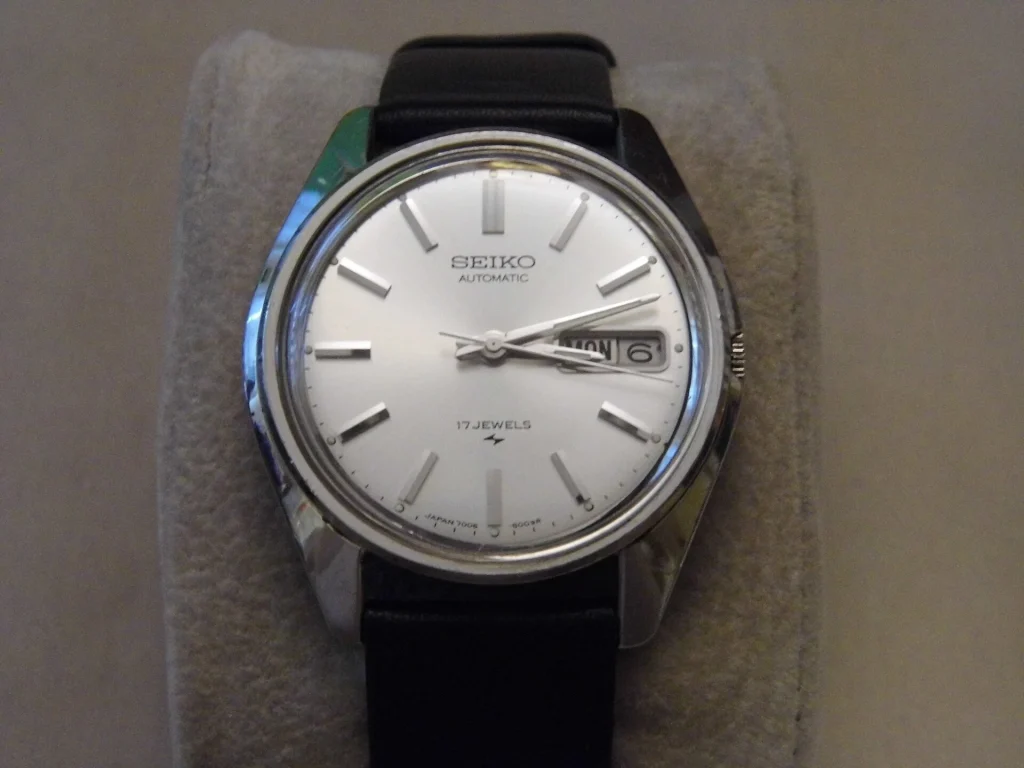
Vintage Seiko is where many watch collections begin. From the 1960s onward the company built tough automatic movements entirely in-house and sold them at prices ordinary people could afford. Millions survive, so there is a huge choice, along with a large number of watches that have been altered or pieced together.
What to Look For
- Watch runs and keeps reasonable time, and the day and date change properly
- Dial is original, not repainted or replaced with an aftermarket one
- Numbers on the dial and case back match the same model
- Case edges are still sharp and not rounded off by heavy polishing
- Seller states when it was last serviced
Popular Models Worth Seeking Out
These lines cover the range from everyday bargains to serious collector pieces.
- Seiko 5 — day-date automatics with hard-wearing movements. The classic affordable starting point.
- Seiko Lord Matic — slimmer, dressier 1970s watches with a more refined movement.
- Seiko 6309 diver — the cushion-cased dive watch nicknamed the Turtle. Tough and very popular.
- Seiko 6139 chronograph — one of the first automatic chronographs, launched in 1969.
- King Seiko — high-grade watches that rival Swiss work of the period.
Our Pick: A Serviced 1970s Seiko 5 or Lord Matic
These are the safest buys. Prices are low enough that fakery is less of a problem, the movements are robust, and a serviced example makes a dependable daily watch.
THE VERDICT
- Movement: Serviced and running
- Dial: Original
- Day-Date: Changing correctly
- Case: Unpolished or lightly worn
Best for: first-time collectors who want a reliable, good-looking mechanical watch without spending much.
Pros & Cons
Pros
- Robust movements built entirely by Seiko
- An enormous variety of styles and colors
- Parts and repair knowledge are widely available
Cons
- Aftermarket dials and pieced-together watches are common
- A proper service can cost more than a cheaper watch is worth
Common Problems to Watch For
- Aftermarket or repainted dials — bright, too-perfect dials on worn cases are a warning sign, especially on divers and chronographs.
- Faulty day-date quickset — a worn part stops the quick-change working, common on Lord Matic models.
- Overdue service — dried oil makes the watch run poorly or stop after a few hours off the wrist.
- Moisture damage — rust on the movement or spotting on the dial from failed seals.
- Over-polished case — soft edges and lost brushing reduce value.
How Much Should You Expect to Pay
- $40–$100: Running Seiko 5 watches, unserviced
- $100–$250: Serviced Seiko 5 and Lord Matic models
- $250–$600: 6309 divers and King Seiko
- $600+: Original 6139 chronographs and rarer divers
Looking After a Vintage Seiko
- Wear it regularly, or give it a gentle shake to start it, since many cannot be wound by the crown
- Keep it away from water, whatever the dial says
- Avoid changing the date between 9pm and 3am, when the mechanism is engaged
Quick Questions, Answered
How do I date a vintage Seiko?
Use the serial number on the case back. The first digit is the last digit of the year and the second is the month.
Does it need winding?
It winds itself as you wear it. After it stops, a gentle side-to-side shake gets it going.
What is a Frankenwatch?
A watch assembled from parts of several others. It may run well, but it is worth less than an original example.
Compare the dial in a listing with photos of confirmed original examples of the same model. Wrong fonts, missing dial codes at the bottom edge and overly bright lume are the usual giveaways.