
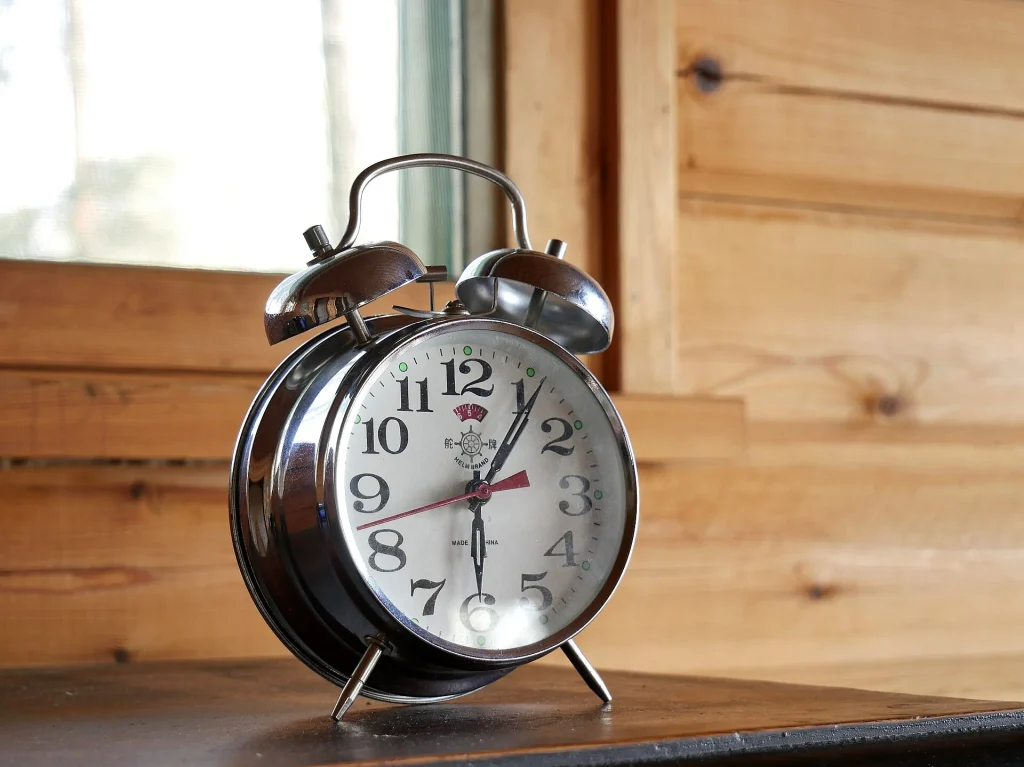
For most of the twentieth century, mornings began with a wind-up alarm clock. They are simple machines with two springs, one for the time and one for the bell, and good ones were built to run for decades. They are also cheap, which makes them an easy first step into mechanical clocks.
What to Look For
- Runs for a full day on one winding and keeps time to within a few minutes
- Alarm rings at the set time, and the shut-off works
- Both winding keys and both setting knobs are present on the back
- Dial is clean and the glass is intact
- Feet, bells and handle are present and firmly attached
Popular Models Worth Seeking Out
A few makers produced these by the million, and their clocks are the easiest to find and repair.
- Westclox Big Ben and Baby Ben — the American classics, made in many styles over several decades.
- German twin-bell clocks from Junghans and Kienzle — the traditional two-bell design, loud and well made.
- Smiths alarm clocks — the British equivalent, with attractive enamel and chrome cases.
- Seth Thomas and Ingraham — solid American alternatives to Westclox.
- Folding travel alarm clocks — small jeweled movements in a hinged case, handy and inexpensive.
Our Pick: A Cleaned and Running Westclox Big Ben
A Big Ben that has been cleaned and oiled is the dependable choice. It is sturdy, good-looking and common enough that a serviced example costs very little.
THE VERDICT
- Movement: Cleaned, runs a full day
- Alarm: Ringing, shut-off working
- Keys: All present
- Dial: Clean, glass intact
Best for: anyone who wants a bedside clock with no cord, no battery and no screen.
Pros & Cons
Pros
- Needs no electricity or batteries
- Plentiful and inexpensive
- Simple movements that can be cleaned and repaired
Cons
- A loud tick that some people find hard to sleep beside
- Needs winding every day and gains or loses a few minutes
Common Problems to Watch For
- Gummed-up oil — the clock runs for a few minutes and stops. It needs cleaning, not a new spring.
- So-called overwinding — a clock that is wound tight but will not run is dirty or worn, not overwound.
- Broken mainspring — the key turns endlessly without tightening.
- Missing keys and knobs — replacements exist but must match the thread.
- Radium paint — glowing numerals on older clocks may contain radium. Leave the glass on and do not scrape the dial.
How Much Should You Expect to Pay
- $10–$25: Untested clocks, sold as-is
- $25–$60: Working Big Ben and Baby Ben clocks
- $60–$120: Serviced examples and earlier models
- $120+: Early nickel-cased Big Bens and art deco designs
Quick Questions, Answered
Is the tick really loud?
Louder than a modern clock, yes. Standing it on a folded cloth or across the room helps.
Is a glowing dial dangerous?
Older dials can contain radium. Behind intact glass the risk is low, but the clock should not be opened or the paint disturbed.
How accurate are they?
A healthy clock stays within a couple of minutes a day, and a small lever on the back lets you adjust the rate.
Ask the seller to wind the clock and report whether it is still running the next day. Plenty of clocks tick happily for the length of a photo session and stop an hour later.